
My first experience with wild camping in Sarawak, located in East Malaysia on the island of Borneo, was nothing short of unforgettable. While the mountain I hiked wasn’t very high, the journey was physically demanding — especially with a heavy backpack on my shoulders.
Discovering a Hidden Gem in the Jungle
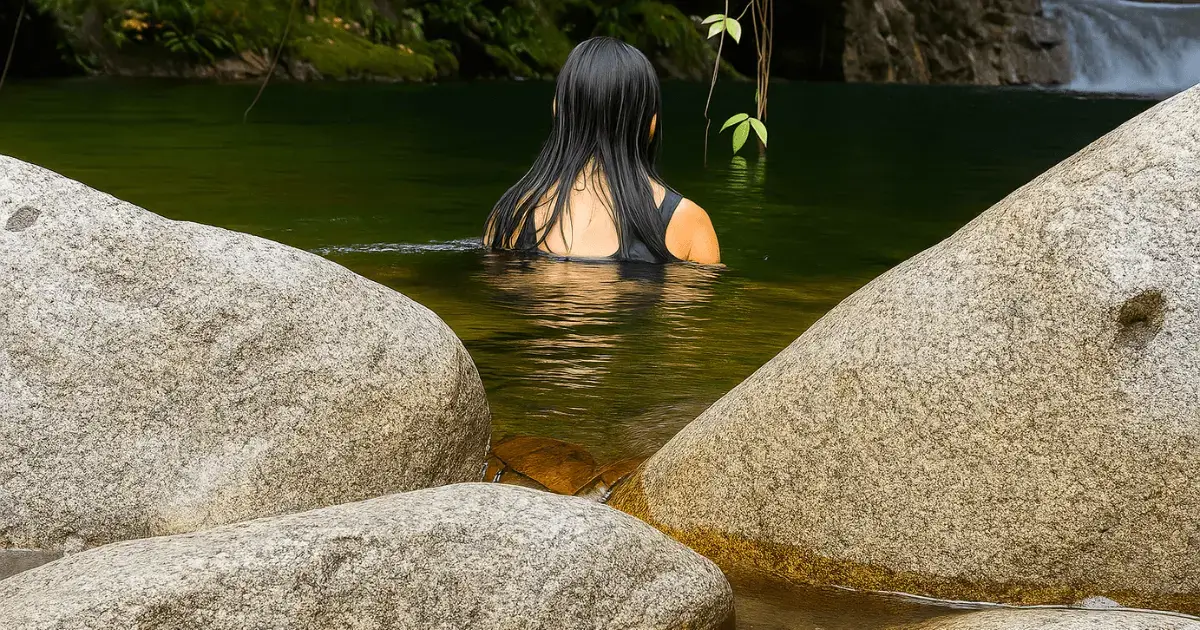
To my surprise, deep in the forest, I stumbled upon an incredibly beautiful waterfall and river. The water was crystal clear, clean, and inviting — an untouched paradise hidden in the heart of Borneo’s wilderness.
I wasn’t alone on this adventure. I was accompanied by one of my nephews — most of them are in their 20s, and this trip took place back in 2022.
When we arrived at the waterfall, I jumped into the river without hesitation. While I didn’t dare swim in the deepest part, I enjoyed the cool water up to shoulder depth.
Behind the rocks, I noticed tiny shrimp and crabs. They were too small to cook, so I left them alone and appreciated the natural biodiversity of the area.
Jungle Cooking Without Equipment: A Lesson in Survival
After swimming, it was time to eat. I made a campfire using basic bushcraft skills, but I quickly realized I had forgotten my cooking utensils.
I searched for bamboo — often used as a natural cooking pot in Malaysian jungle survival — but there were no bamboo trees in sight. I also looked for pitcher plants (Nepenthes), another natural container used to cook rice in the wild. Again, none were found.
Eventually, I found an old rusty can with several holes. Cooking food in rusted containers is dangerous and not recommended, but in the wild, you sometimes have limited options. Luckily, I had aluminum foil, which I used to line the inside of the can and cover the food, preventing direct contact with the rust.
I patched the bottom hole with small branches and carefully placed the rice wrapped in foil inside the can. To my relief, the rice cooked perfectly. It wasn’t the healthiest method — but in the jungle, adaptability is survival.
Sleeping on a Rock: A Chilly Night by the River
That night, I found some wild mushrooms and used them to prepare a simple dinner. Earlier in the day, I had eaten only a single bun before leaving the house — so this meal felt very satisfying.
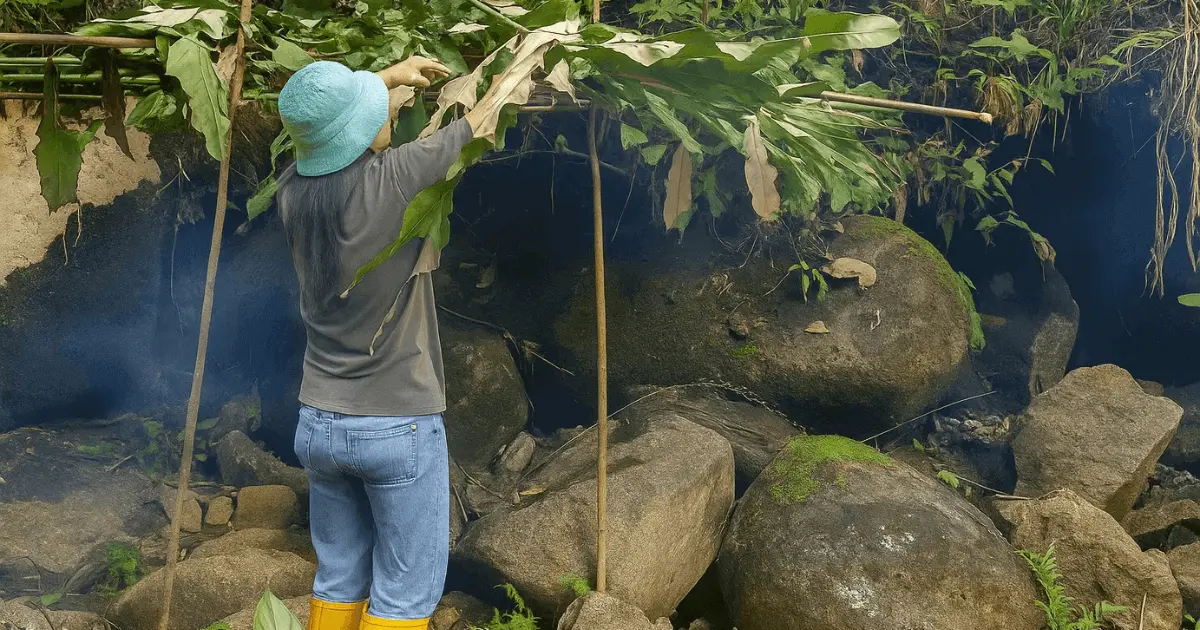
While waiting for the rice to cook, I built a small bushcraft shelter to protect myself and my belongings from the rain. It wasn’t meant for sleeping, though.
Instead, I chose to sleep on a large rock by the river, with the sound of flowing water surrounding me. It was cold and I only managed to sleep for a few hours. I built a fire nearby to keep warm. I had no blanket, no sleeping bag — only my clothes to get me through the night.
Yes, it might sound crazy. But in a real jungle survival situation, especially when you’re not fully prepared, you learn to make do. Despite the discomfort, I felt a deep sense of peace and connection to nature.
Lessons from Wild Camping in Sarawak
This wild camping trip wasn’t just about adventure — it was about learning. I learned to:
-
Improvise cooking methods in the absence of proper tools
-
Use local resources to stay warm and safe
-
Respect nature’s beauty and power
-
Stay calm and solve problems under pressure
⚠️ Safety Note: I do not recommend sleeping on rocks near rivers unless you are absolutely certain the area is safe. Always prioritize your safety and stay alert even while resting.
Final Thoughts: Embracing Bushcraft and Jungle Survival
As I packed up around 6 a.m. and headed to my next destination, I felt grateful for the experience. Wild camping in Sarawak gave me valuable lessons in resilience, resourcefulness, and appreciation for nature.
It also sparked a growing passion for improving my Malaysian bushcraft and survival skills — something I’m excited to continue exploring.
🏕️ Have you tried wild camping in Malaysia or Borneo?
Share your own experience or survival tips in the comments!